

From the ranch
When the Building Didn’t Hold, We Did
Kenneth Fomby’s update after severe weather tested the buildings—and the people behind K&D.
Read the storyAdd a brief introduction to the page.
Barn notes from K&D Equestrian
Useful gear advice, better barn routines, and stories from the people behind K&D.
From the ranch
Kenneth Fomby’s update after severe weather tested the buildings—and the people behind K&D.
Read the story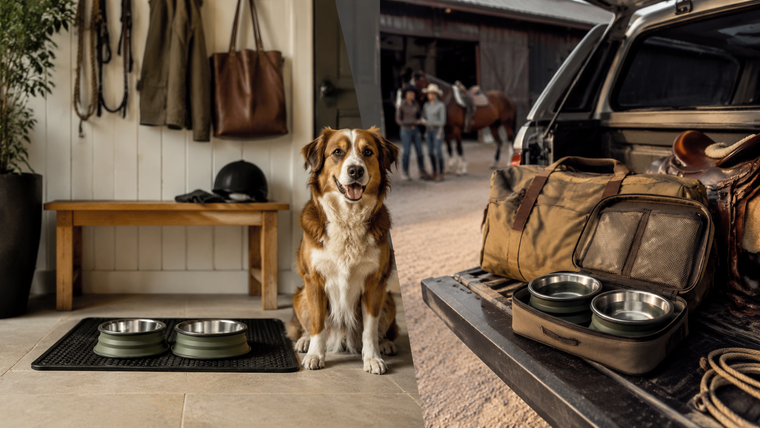
Keep one bowl in daily service and one clean bowl ready in the truck or barn, then swap, wash, dry, and return the...
Read article: Two Dog Bowls, One Simple Rotation: Home, Truck, and Barn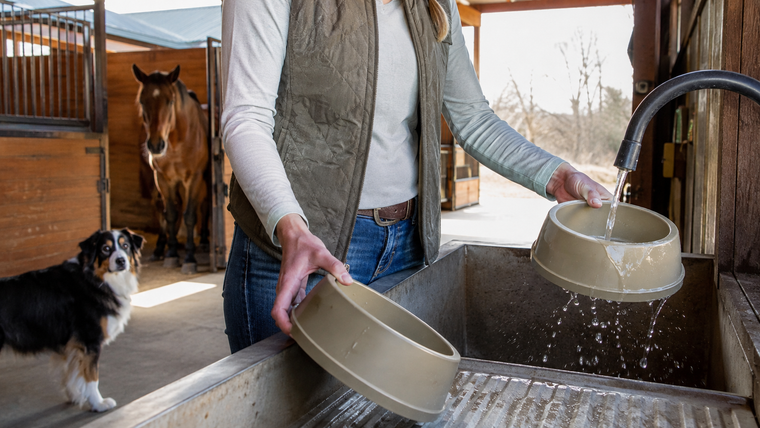
Empty, rinse, and refill water bowls daily at minimum, wash food bowls after meals, and clean sooner whenever saliva film, feed residue, dirt,...
Read article: How Often Should You Clean an Outdoor Dog Bowl at the Barn?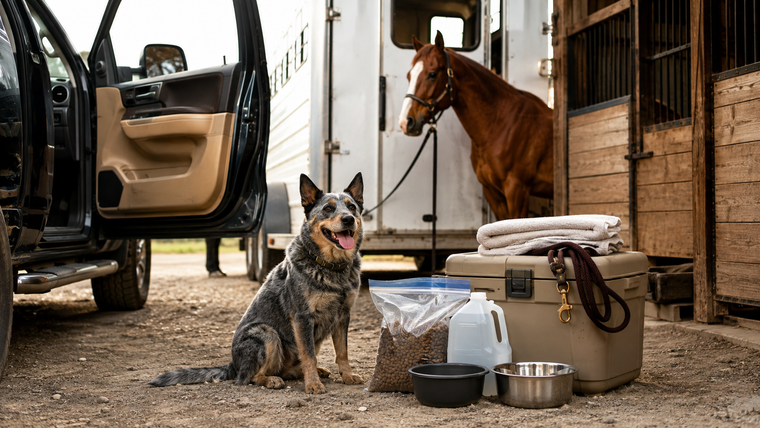
Keep two clean bowls, fresh water, measured food, waste bags, towel, identification, and dog-specific medications or records in a dedicated kit that is...
Read article: Barn Dog Travel Feeding Kit: What Belongs in the Truck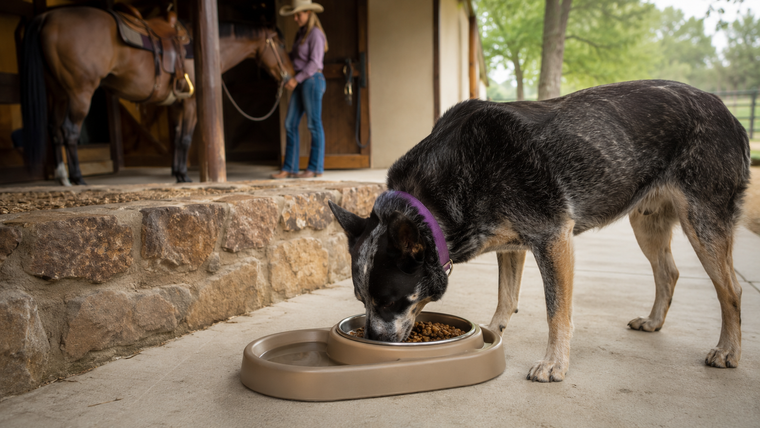
A two-piece bowl can use water in the outer section as a physical moat around the inner food bowl, making the path harder...
Read article: Ant-Resistant Dog Bowl: How a Water-Moat Design Works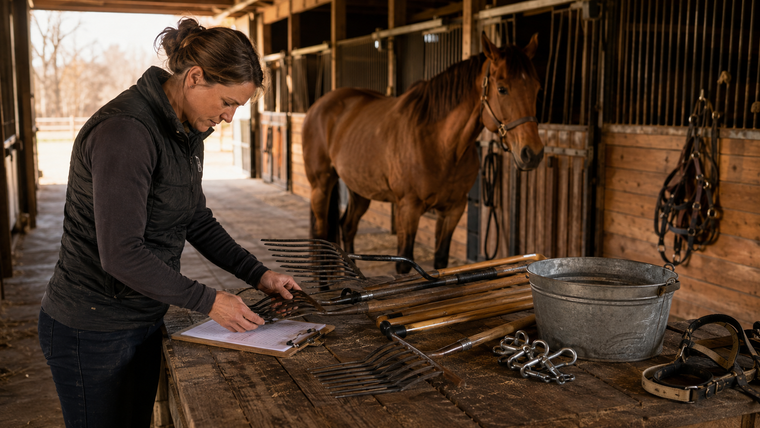
Inspect high-use forks, rakes, bucket hardware, feed tools, hoses, and trailer kits before freezing weather; replace known weak parts while daylight and working...
Read article: Winter Barn Tool Prep: What to Repair Before Frozen Mornings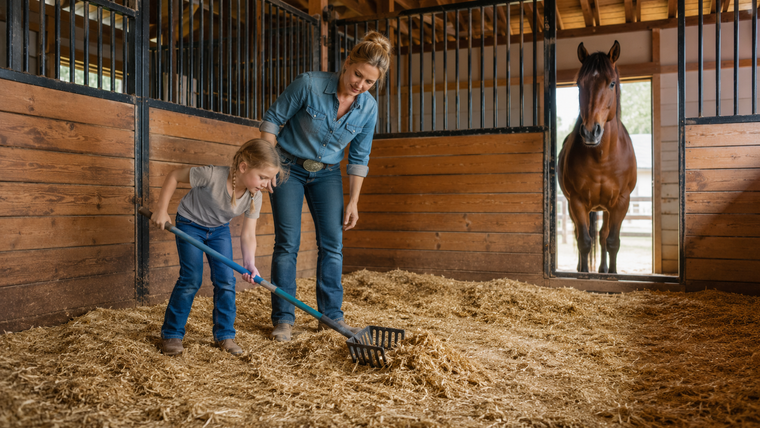
Assign chores by the child's maturity, strength, attention, horse experience, and supervision—not age alone—and use a correctly sized real tool for safe, meaningful...
Read article: Kids’ Barn Chores by Age: Match Responsibility to the Tool
Meet Ella, a 1,400-plus-pound Warmblood with a history of bent handles and broken buckets. Follow Karen’s K&D bucket updates, starting with: “It’s in...
Read article: The Ella Test: A Beautiful Jumper with a History of Breaking Buckets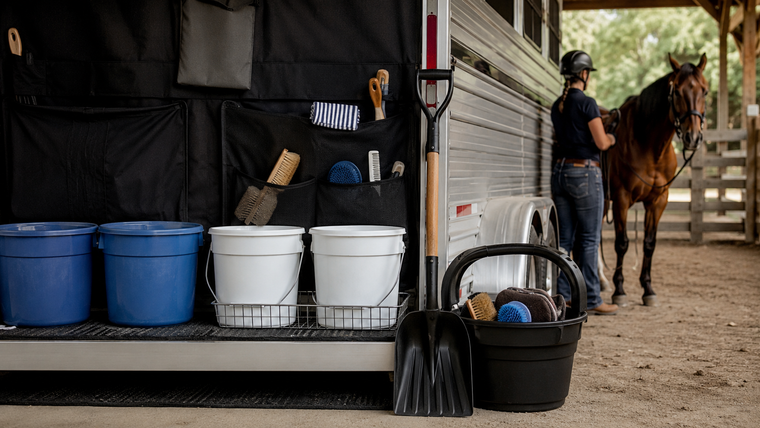
Keep trailer buckets, feed tools, grooming items, and cleanup gear assigned to that rig or horse group, clean them between trips, and follow...
Read article: Horse Trailer Biosecurity: Buckets, Tools, and Gear That Should Not Wander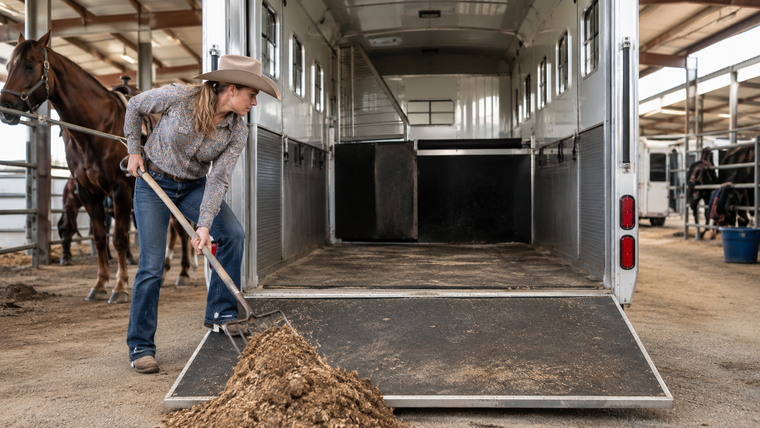
Unload horses safely, remove manure and wet bedding, sweep or fork loose material, air and dry the trailer, inspect floors and hardware, then...
Read article: Horse Trailer Cleanup After Every Trip: A 15-Minute Reset System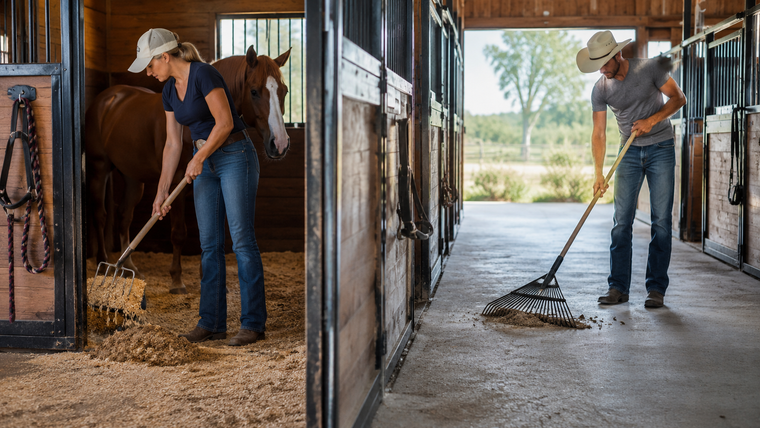
Use a stall fork to lift and sift bedding, and a rake-style tool to pull, level, gather, or move broader loose material; the...
Read article: Stall Fork vs Barn Rake: Stop Making One Tool Do Every Cleanup Job
Place the right fork or rake, disposal container, gloves, and spare parts near each recurring job so tools stop migrating between stalls, trailers,...
Read article: How to Build a Barn Cleanup Station for Every Chore Zone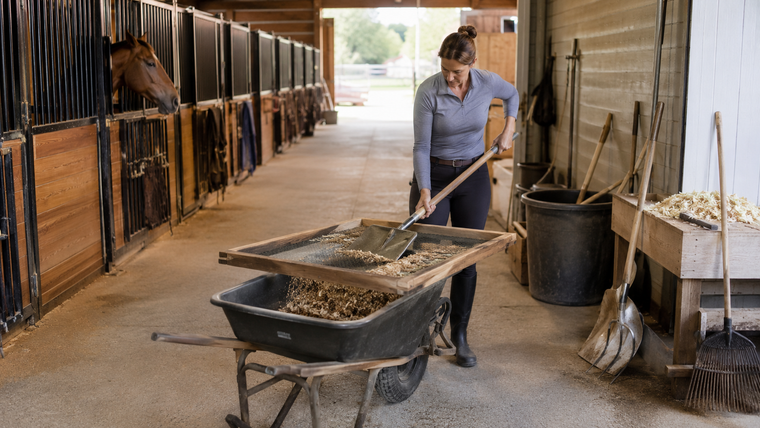
Time the route, not just the shoveling: stage tools, remove manure first, isolate wet bedding, sift with consistent motions, reset banks and feed...
Read article: How to Time a Stall-Cleaning Workflow Without Rushing the Horse Care