

How to Make a Feed Scoop Label That Survives Barn Life
Use a short, readable label on a suitable exterior area of the scoop, backed by matching instructions at the feed container.
Read article: How to Make a Feed Scoop Label That Survives Barn LifeAdd a brief introduction to the page.
Barn notes from K&D Equestrian
Useful gear advice, better barn routines, and stories from the people behind K&D.
Use a short, readable label on a suitable exterior area of the scoop, backed by matching instructions at the feed container.
Read article: How to Make a Feed Scoop Label That Survives Barn Life
During an approved feed transition, keep the old and new feeds in separate labeled containers and use the written ration plan.
Read article: Horse Feed Changeover: Keep Old and New Feed Clearly Separated
Give the substitute one current set of horse-specific instructions, a walk-through, clearly assigned equipment, and an escalation contact.
Read article: Holiday Barn Coverage: Write Instructions a Substitute Can Use
Compare the covered product, covered failure, eligible purchaser, exclusions, and claim process—not just the word lifetime.
Read article: How to Compare Horse Bucket Warranties Before Buying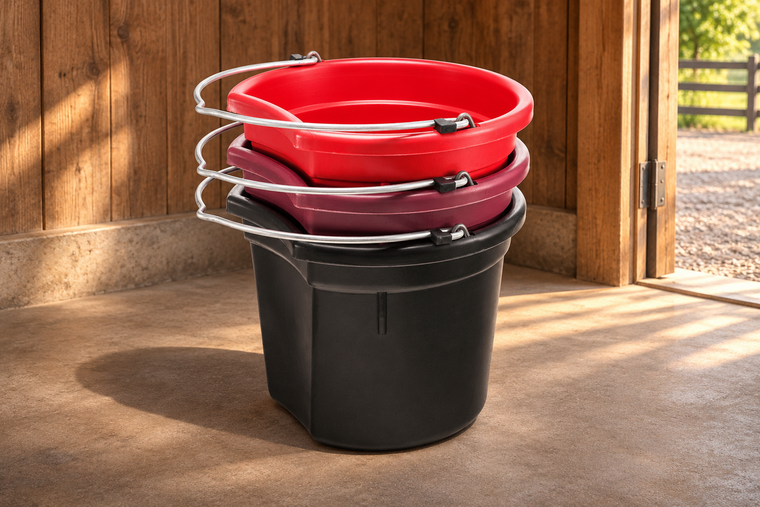
Review water quality, access, placement, and mounting when a horse plays with its bucket. Use a practical setup checklist before buying replacements.
Read article: When a Horse Plays With Its Water Bucket: Audit the Setup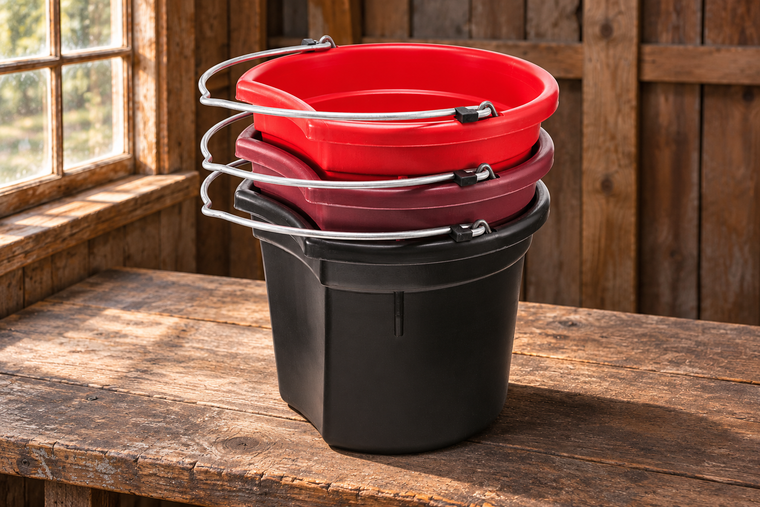
Inspect the handle, its attachment points, the surrounding plastic, and any protective fittings before loading a horse bucket.
Read article: Horse Bucket Handle Inspection: What to Check at the Attachment Points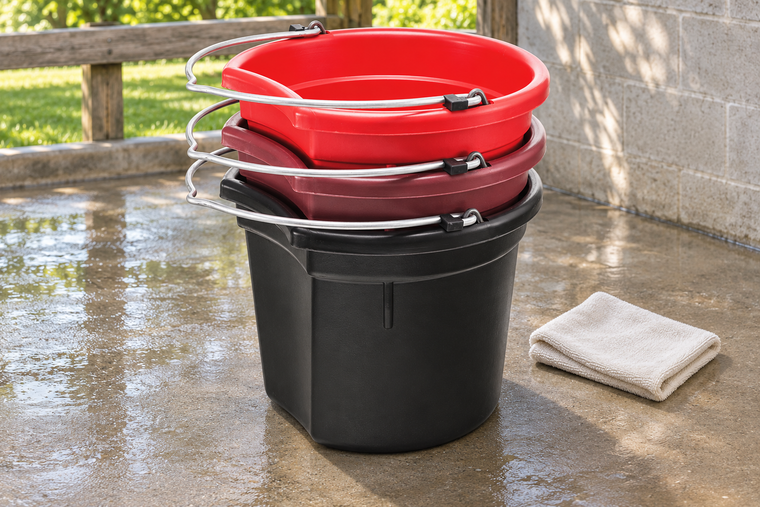
Persistent odor can come from residue, trapped material around the rim or fittings, the cleaning product, or the water itself.
Read article: Why a Horse Bucket Still Smells After Washing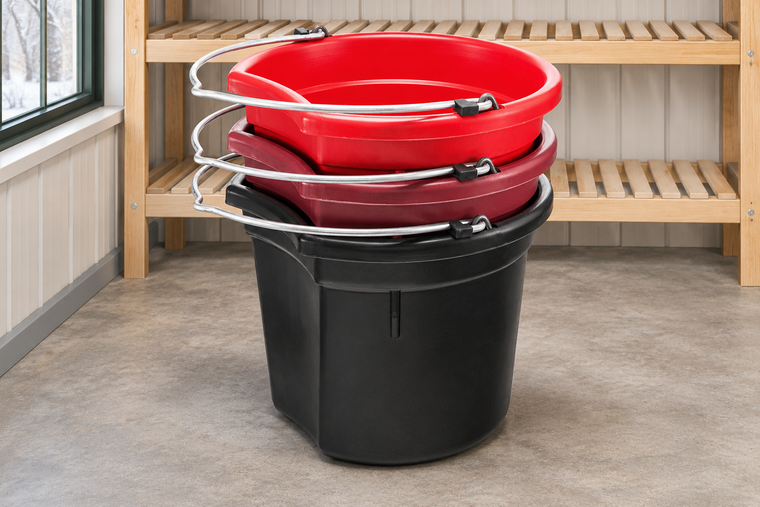
Dry cleaned horse buckets in a protected, ventilated area where water can drain away from walking routes and the inside cannot be recontaminated.
Read article: Where Should Clean Horse Buckets Dry in Winter?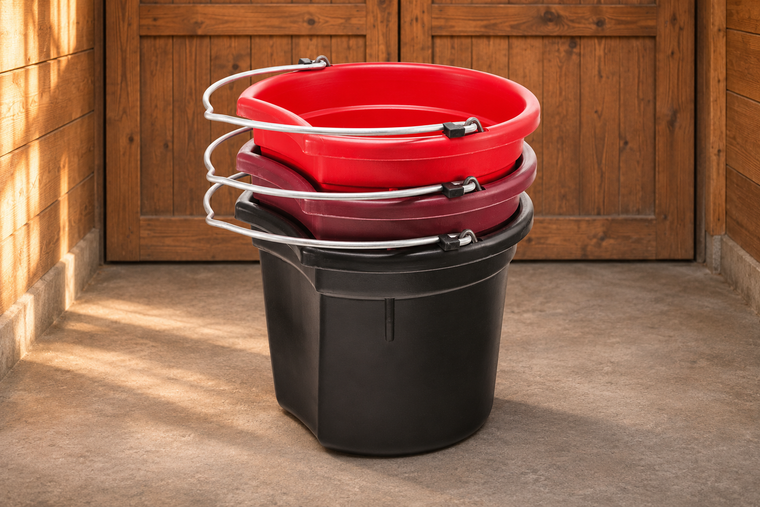
Keep clean spare containers, identify a reliable alternate water source, and assign the transport and refill jobs before an outage.
Read article: A Spare Bucket Plan for Barns With Unreliable Water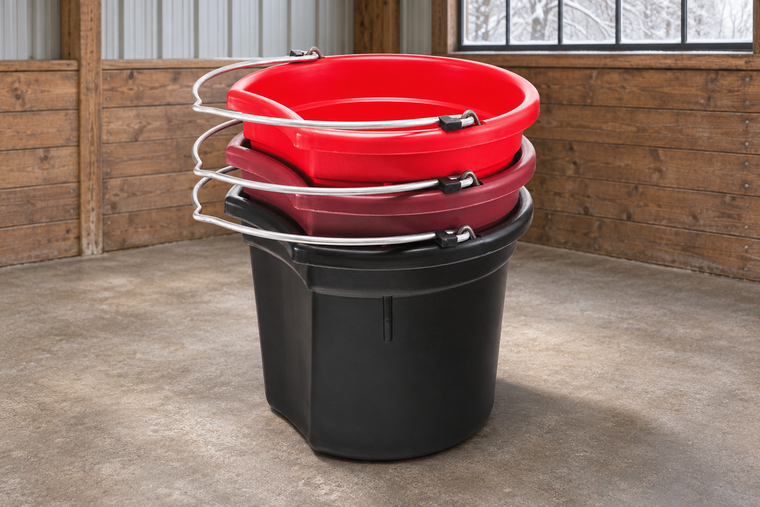
Do not add a heater to a plastic horse bucket unless both manufacturers explicitly confirm compatibility for the exact equipment and installation.
Read article: Can You Add a Heater to a Plastic Horse Bucket? Check Compatibility First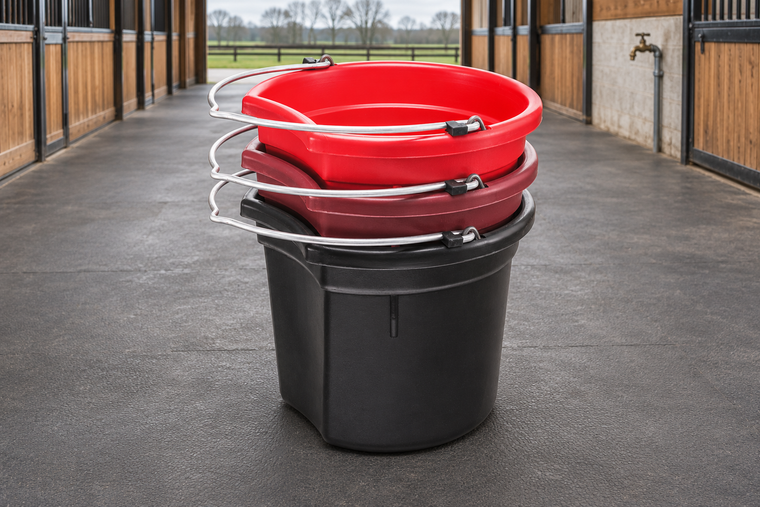
Choose a fill level you can control, keep the route clear, and make extra trips or use suitable transport when the load is...
Read article: How to Carry Horse Water Without Overfilling the Bucket
Record every measured fill and top-up, then subtract the water left at the end of the observation period.
Read article: How to Record Horse Water Use Without Guessing